The International Monetary Fund (IMF) stated on Friday, while presenting in Paraguay the Regional Economic Outlook for the Americas (REO), that countries around the world «must get used to living with increasingly high levels of uncertainty, possibly for a longer time».
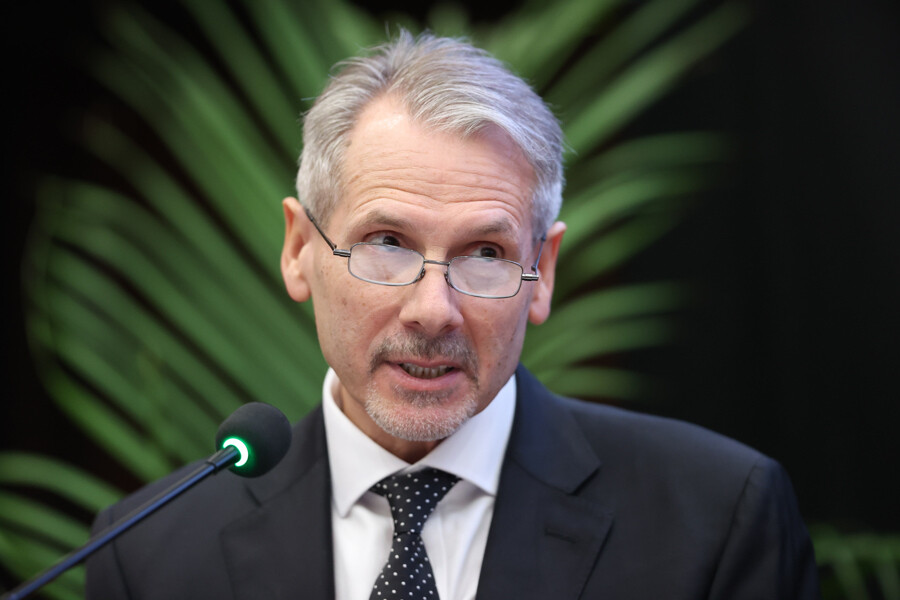
According to the Head of the Regional Studies Division of the IMF's Western Hemisphere Department, Esteban Vesperoni, the global economy is facing «a kind of reallocation of priorities», which he considered «does not have a very clear expiration date», so, as he said, uncertainty will remain for a longer period, which «is unknown».
«It is true that countries have to get used to living with increasingly high levels of uncertainty, possibly for a longer time,» Vesperoni added during his speech at an event organized by the Central Bank of Paraguay (BCP).
According to figures from the Global Economic Outlook report, presented this Friday in Asunción, the capital of Paraguay, the economy of Latin America and the Caribbean will grow by 2.4% in 2025 and by 2.3% in 2026.
In 2024, the region had recorded an expansion of 2.4%.
Vesperoni pointed out that in the face of the «reallocation» or «reevaluation of social preferences in many countries,» it is important to have «very clear macroeconomic policy frameworks, that provide certainty in the face of uncertainty».
Meanwhile, the president of the BCP, Carlos Carvallo, stated in his speech that the IMF report is an «indispensable reference» for understanding the evolution of the regional economy «in a global context of high uncertainty».
«It is in this particular world scenario that Latin America faces a major challenge, the challenge of preserving the achievements made with effort in terms of macroeconomic and social stability, and at the same time, building the basis for a more dynamic, inclusive, and sustainable growth,» affirmed Carvalho.