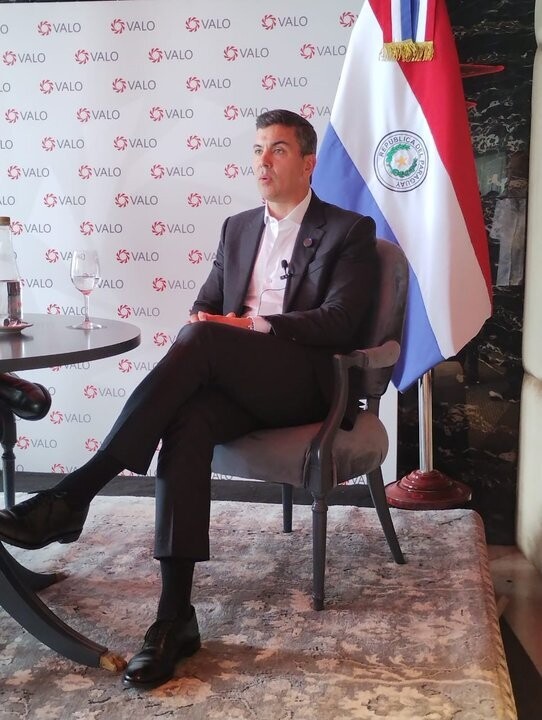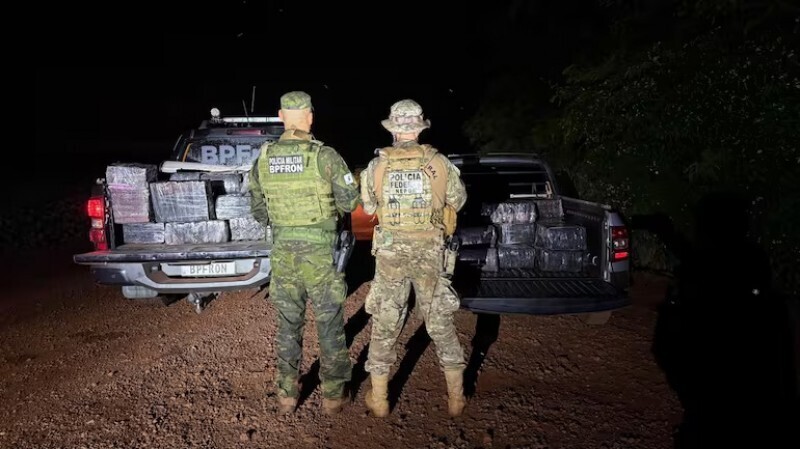
As announced on November 6 by the National Defense Council, the fight against organized crime would be reinforced with the deployment of 4,000 military personnel and 7,000 police. The seizure occurred ten days after Paraguay launched Operation 'Guarani Shield,' which militarized the border departments with Brazil and Argentina. The largest concentration of forces would be precisely in vulnerable areas like Canindeyú and Alto Paraná, adjacent to the Itaipu reservoir, where the discovery occurred. Upon arriving at the location, they found the drugs stacked in the middle of the forest. The seizure occurred ten days after Paraguay launched Operation 'Guarani Shield,' which militarized the border departments with Brazil and Argentina. Ministers Enrique Riera (of Paraguay's Interior) and Ricardo Lewandowski (of Brazil's Justice) signed an agreement to directly combat transnational organized crime on the border. The agreement formalized the establishment of the Bipartite Command Salto del Guairá/Canindeyú - Guaíra/Paraná. The procedure by Brazilian forces demonstrated that the drug not only crosses the Paraguayan border without control, but also moves without issues from the plantations in Canindeyú or Amambay. Ricardo Lewandowsky and Santiago Peña. This massive seizure came days after Paraguay and Brazil signed a key inter-institutional agreement. Transnational organized crime continues to move with apparent freedom through Paraguay, finding flaws in border surveillance despite militarization. The seizure also comes a month after Paraguay launched the Jejoko Mbarete operation, with the aim of having the Military Forces support the National Navy in the fight against contraband at strategic points. The drug would have entered from the Paraguayan side through clandestine ports. Brazilian police agents observed a boat cross from Paraguay, briefly dock in Brazil, and immediately return. Currently in a 'truce' with Comando Vermelho, both organizations maintain active drug trafficking routes. As confirmed by Paraguayan security forces, 'Guarani Shield' also includes the use of four A-29 Super Tucano aircraft for border control and aerial patrol actions. The intention is to unify work criteria to optimize results in the border area. The massive seizure occurred just one day after Enrique Riera and Ricardo Lewandowski signed the agreement to directly combat transnational organized crime on the border. Paraguay is considered a crucial territory for criminal gangs, being the most important base for the PCC outside Brazil for the stockpiling and distribution of cocaine. However, the successful crossing of almost a ton of drug suggests that organized crime continues to exploit blind spots and clandestine ports. The fact that almost a ton of marijuana crossed the militarized border, and right after the signing of a bipartite command, underscores a persistent challenge. The gang also controls the cultivation, transport, and trafficking of marijuana and the supply of the Brazilian market. Agents of the Federal Police and Military Police of Brazil seized 952.3 kilos of marijuana on the banks of the Itaipu reservoir, in the district of Itaipulandia, Paraná state, this Sunday. This mechanism will allow the security organizations of both countries to exchange information and develop operational response mechanisms.